







Benjamin Netanyahu Arrives in Washington for High-Stakes Meeting With President Trump
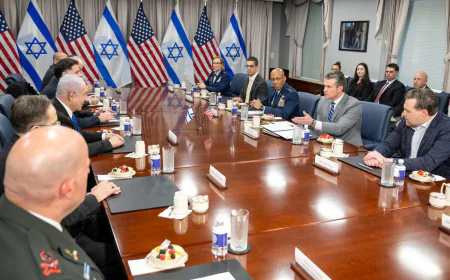
Israeli Prime Minister Benjamin Netanyahu arrived in Washington on February 26 2026 for a high-stakes meeting with President Trump focused on the Gaza ceasefire framework hostage negotiations and the future of U.S. military aid to Israel.

Netanyahu Lands in Washington as Gaza Ceasefire Hangs in the Balance
Israeli Prime Minister Benjamin Netanyahu touched down at Andrews Air Force Base on Wednesday morning, February 26, 2026, for what both governments have described as one of the most consequential bilateral meetings in years. The agenda is dense, the stakes are enormous, and the timing is fraught: a fragile ceasefire in Gaza has held for six weeks, but negotiations over its second phase — including the fate of remaining hostages and the long-term governance of Gaza — have stalled badly.
Netanyahu is expected to meet President Trump at the White House Wednesday afternoon for discussions that could last several hours. Senior advisors on both sides have been in communication daily for the past week laying the groundwork for what Washington hopes will produce a concrete agreement on Phase 2 of the ceasefire deal brokered in January.
The Key Issues on the Table in Washington
At the core of the talks is a fundamental disagreement over what Phase 2 actually means. Hamas negotiators, speaking through Qatari and Egyptian intermediaries, have insisted that Phase 2 must include a permanent end to hostilities and a full Israeli military withdrawal from Gaza. Israel has refused both conditions, arguing that military pressure must be maintained until all remaining hostages are returned and Hamas military capacity is permanently degraded.
Of the 101 hostages still believed to be held in Gaza when the January ceasefire took effect, 38 have been released under Phase 1 terms. The remaining 63 are at the center of intense behind-the-scenes negotiation. Families of those still held have maintained a constant presence in Tel Aviv, and the pressure on Netanyahu domestically to secure their release is immense.
According to Middle East policy analyst Dr. Jonathan Schanzer at the Foundation for Defense of Democracies, Netanyahu comes to Washington needing two things: Trump's public backing for Israel's Phase 2 position and continued assurance of U.S. military resupply. Without both, his political position at home becomes untenable.
U.S. Military Aid and Regional Pressures
The question of U.S. military aid is equally delicate. The Trump administration resumed full arms deliveries to Israel shortly after taking office in January 2025, reversing restrictions put in place during the final months of the Biden administration. But pressure from Arab governments — particularly Saudi Arabia and Jordan — has intensified ahead of Netanyahu visit.
Saudi Crown Prince Mohammed bin Salman reportedly communicated to Washington directly last week that continued progress on Saudi-Israeli normalization, a key Trump foreign policy goal, is impossible while Israeli military operations in Gaza continue at their current tempo.
Netanyahu coalition government at home remains precarious. His far-right coalition partners have threatened to collapse the government if Phase 2 includes any agreement they perceive as a reward to Hamas. Balancing their demands against Trump expectations and international pressure will require extraordinary political dexterity.
Whether the Washington meeting produces a breakthrough or simply buys more time, the coming days will define the next chapter of a conflict that has reshaped the Middle East in ways that will take years to fully understand.